Do I Really Need a Wedding Video? A Guide to Wedding Videography
Photographs show how the day looked. Film keeps how it sounded: the vows, the toasts, a grandparent’s laugh. Styles, deliverables, drones, audio and contracts, and how to decide whether it’s worth it.
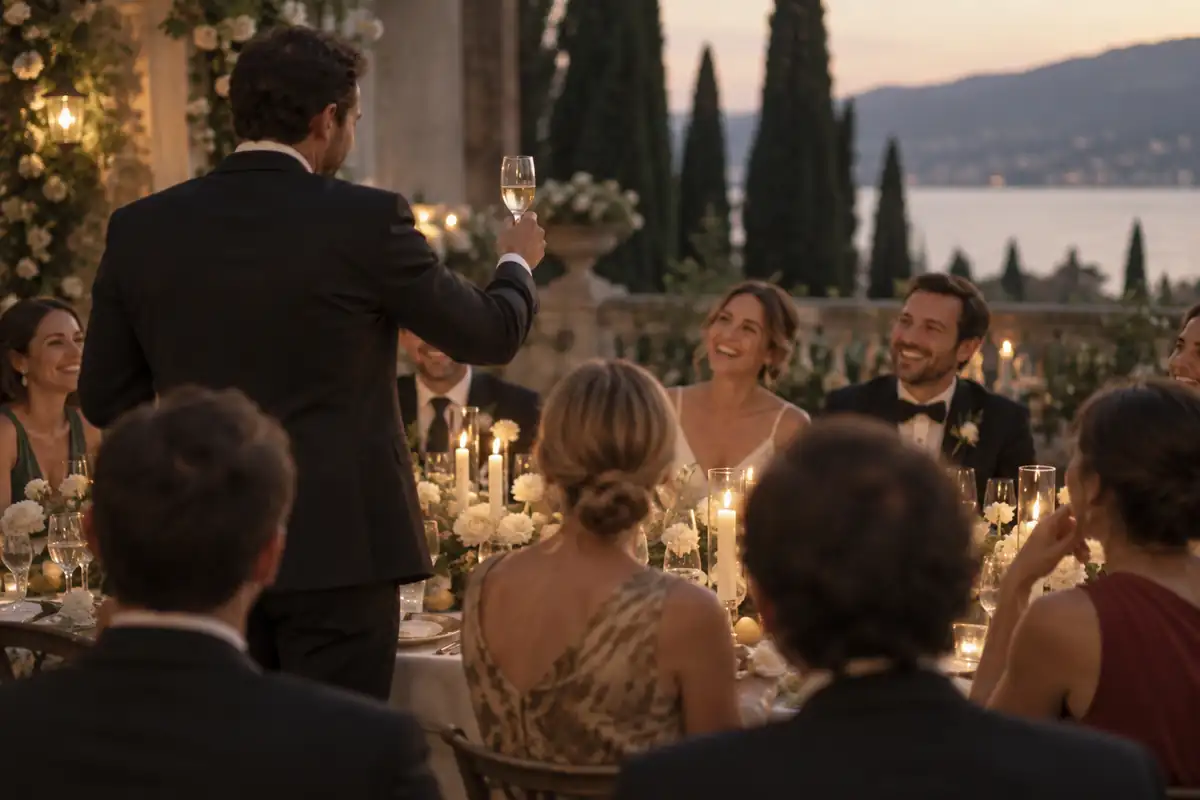
The case for a wedding video has never really been about the pictures. It is about sound. A photograph can show you walking down the aisle; it cannot let you hear the officiant say your names, your partner’s voice catch on the second line of the vows or your late grandfather’s toast, all of which a film keeps intact. And the value of those recordings tends to grow with time, as the people in them grow older or are gone.
That doesn’t mean everyone needs one. If the budget is tight, a good photographer comes first, and a well-recorded ceremony audio file costs very little. But it’s worth understanding what wedding film looks like now before deciding.
What has changed
The tape era is long gone. Videographers now shoot on compact cinema and mirrorless cameras that work in low light without floodlights, record sound separately on small recorders, and deliver films digitally, by download link or online gallery, rather than on discs. Most offer two products: a short, music-driven film of the day, and longer, more documentary edits of the ceremony and speeches. The result is less intrusive to shoot and far more watchable than the three-hour tapes of the past.
Filming styles
Cinematic. Shot and edited like a short film, with music, careful composition and often a narrative built from the vows and toasts. This is the dominant style.
Documentary. Events filmed largely in order, with less music and more natural sound. Better if you want to see the day as it happened.
Journalistic or unobtrusive. Minimal direction; the videographer stays out of the way. Most good videographers work this way during the ceremony regardless of their editing style.
Content creators. A newer service, distinct from videography: someone films vertical clips on a phone throughout the day and delivers them the same night, for social media. It complements a videographer rather than replacing one.
Watch at least two complete films from each candidate, not just highlights. Ideally one should be from a venue or a light like yours.
What you get: the deliverables
Packages vary widely, so compare them line by line.
A teaser or trailer. A minute or so, for sharing, sometimes delivered within days.
A highlight film. The main product: typically a few minutes of the best moments set to music, often built around audio from the vows and toasts.
A feature film. A longer edit of the whole day.
Documentary edits of the ceremony and toasts. The full, uncut ceremony and speeches, multi-camera. These are the edits families watch for decades; make sure they’re included.
Raw footage. Some videographers provide it, some charge for it, some don’t release it. Ask.
Ask how long each edit runs, how many revisions you get, whether you choose the music, and when each piece will be delivered. Editing is slow, careful work; delivery can take months, and the contract should give a date.
Audio: the part that matters most
Image quality is easy now. Sound is not. A ceremony recorded only through a camera microphone at the back of the room will be full of guests coughing and wind.
Ask every candidate how they record the ceremony and the speeches. Good answers include a small lavalier microphone clipped to one partner or the officiant, a recorder on the lectern or the officiant’s stand, and a direct feed from the DJ’s or venue’s sound board for toasts. Readers and anyone giving a toast need to speak into the microphone they are handed; tell them so in advance.
Coordinate sound with your DJ or band, who should supply a wireless microphone for the officiant; our guide to hiring a DJ covers ceremony sound.
Drones
Aerial footage of a venue can be beautiful, especially for estates, beaches and vineyards. Before you pay for it, check three things.
The pilot’s certificate. In the United States, anyone flying a drone for work or business needs a Remote Pilot Certificate from the Federal Aviation Administration under Part 107, and drones must be registered. Ask to see the certificate.
The venue’s rules. Many venues, parks and historic sites restrict or ban drones; some locations sit in controlled airspace. Ask the venue before you book the add-on.
The conditions. Wind and rain ground drones. Treat aerial shots as a bonus, not a promise, and never let one buzz over the ceremony during the vows.
Professional or a friend with a phone
A friend with a good phone can capture lovely moments, and a phone on a small tripod at the front, recording the ceremony, is far better than nothing. But a single fixed phone can’t follow the processional, can’t change angle and can’t fix bad sound. And the friend filming isn’t really a guest. If you go this route, set up two phones on tripods for the ceremony, record audio separately on a third device near the officiant, and give the job to someone who is happy to do it.
Working with the photographer
Your photographer and videographer will share the same few square feet at every important moment. Many photography studios have their own video team, which makes coordination easier; if you hire separately, ask each whether they have worked together before and introduce them early. Build time for both into the reception timeline and the portrait schedule. For choosing the photographer, see our guide to wedding photography.
If you are having an unplugged ceremony, your videographer is one of the main beneficiaries: no screens rising into the shot for the kiss.
Houses of worship and venue rules
Some churches, synagogues and other houses of worship restrict where a videographer can stand or whether they can film at all, and some forbid lights or movement during the service. Ask your officiant early and pass the rules to your videographer, who should attend the rehearsal if possible to learn the space and the order of the ceremony.
When to book
There are far fewer good wedding videographers than photographers, and the best book up early. Begin looking soon after you’ve booked the venue and photographer.
Questions to ask and what the contract should say
Ask:
- Who will film our wedding, and how many shooters are included?
- How do you record ceremony and toast audio?
- What backup equipment do you carry, and do you record to two cards at once?
- How do you work during the ceremony, and what will you wear?
- Have you filmed at our venue, or in a similar light?
Put in the contract:
- the names of the videographers and the number of shooters
- hours of coverage, start and end times, and the overtime rate
- every deliverable, with its approximate length and delivery date
- music licensing for the films, and whether you can share them publicly
- whether raw footage is included, and for how long files are archived
- the deposit, payment schedule and cancellation terms
- a meal and a break for the crew
So, do you need one?
If the budget allows only one, choose an excellent photographer. If you can stretch it, a videographer who covers the ceremony and toasts with good sound gives you something photographs never will. Fold the decision into your wedding budget early rather than at the end, when the best people are booked.
Written and edited by the Today’s Weddings editors. How we research and check what we publish is set out in our editorial standards. Spotted something wrong? Tell us.