Rehearsal Dinner Etiquette: Who Hosts, Who’s Invited
The night before the wedding belongs to the people closest to it. Who hosts and pays, whom to invite, how the toasts work, and when a welcome party makes more sense.
The rehearsal dinner is the one wedding event that exists mainly for the people who are about to work hardest. After an hour of walking the aisle and learning where to stand, the wedding party, the families and the officiant sit down together, often for the first time, and the couple gets to thank them before the day itself sweeps everyone along. It isn’t required. But it is one of the most enjoyable evenings of the whole celebration, and it does practical good: by the time the processional begins, everyone has met.
When it happens
The rehearsal usually takes place the day before the wedding at the ceremony site, and the dinner follows directly. If the venue isn’t free the day before, hold the rehearsal and dinner two nights before, or rehearse briefly on the morning of the wedding and hold a dinner the night before regardless.
Plan the evening so it ends early enough for everyone to sleep. The couple, the wedding party and anyone getting their hair done at dawn will be grateful.
Who hosts and who pays
Tradition. By long custom, the groom’s parents host the rehearsal dinner, a counterpart to the bride’s family paying for the wedding. Our guide to who traditionally pays for a wedding sets out the old division.
Today. Either family may host, the two families may share it, a grandparent or other relative may offer, and many couples host it themselves. Same-sex couples, couples paying for their own wedding and families with very different budgets all make the old rule a loose one.
The principle. Whoever pays is the host, and the host has a real say in the guest list, venue and menu. If parents offer to host, agree on a budget and a guest count early and in writing. If you want the evening to look a particular way, be prepared to contribute to it.
Who is invited
Always invited:
- the couple
- the wedding party, including junior attendants and the parents of child attendants
- the partners or spouses of the wedding party
- parents and stepparents, and siblings
- the officiant and their partner, if they attend the rehearsal
Often invited:
- grandparents
- readers and anyone else with a role in the ceremony
- close family who have traveled
- out-of-town guests
Inviting every out-of-town guest is a generous gesture, but at a destination wedding it can mean most of the guest list. If that is the case, consider a welcome party instead (below). However large it grows, keep the evening noticeably smaller than the wedding.
Invitations
A rehearsal dinner can be arranged by phone, message or email, especially if it is small. For a larger or more formal dinner, send printed or digital invitations from the host, separately from the wedding invitation, once wedding RSVPs are coming in. Include the time, place, dress code and how to reply.
Please join us for a rehearsal dinner
in honor of Ana and James
Friday, the fourteenth of May
at seven o’clock
Osteria Rossa, 112 Water Street
Kindly reply to Elena and Martin Ruiz
Put the time and address of the rehearsal itself on the wedding party’s schedule, not on the dinner invitation, since many dinner guests won’t attend the rehearsal.
Where to hold it, and what to serve
Choose somewhere close to the rehearsal site, so nobody spends the evening in traffic, and ideally close to where guests are staying. A private room at a restaurant is the classic choice; a family home, a garden, a brewery or a long table at a favorite neighborhood place all work well. Share the address, parking details and a ride-share or carpool plan with out-of-town guests.
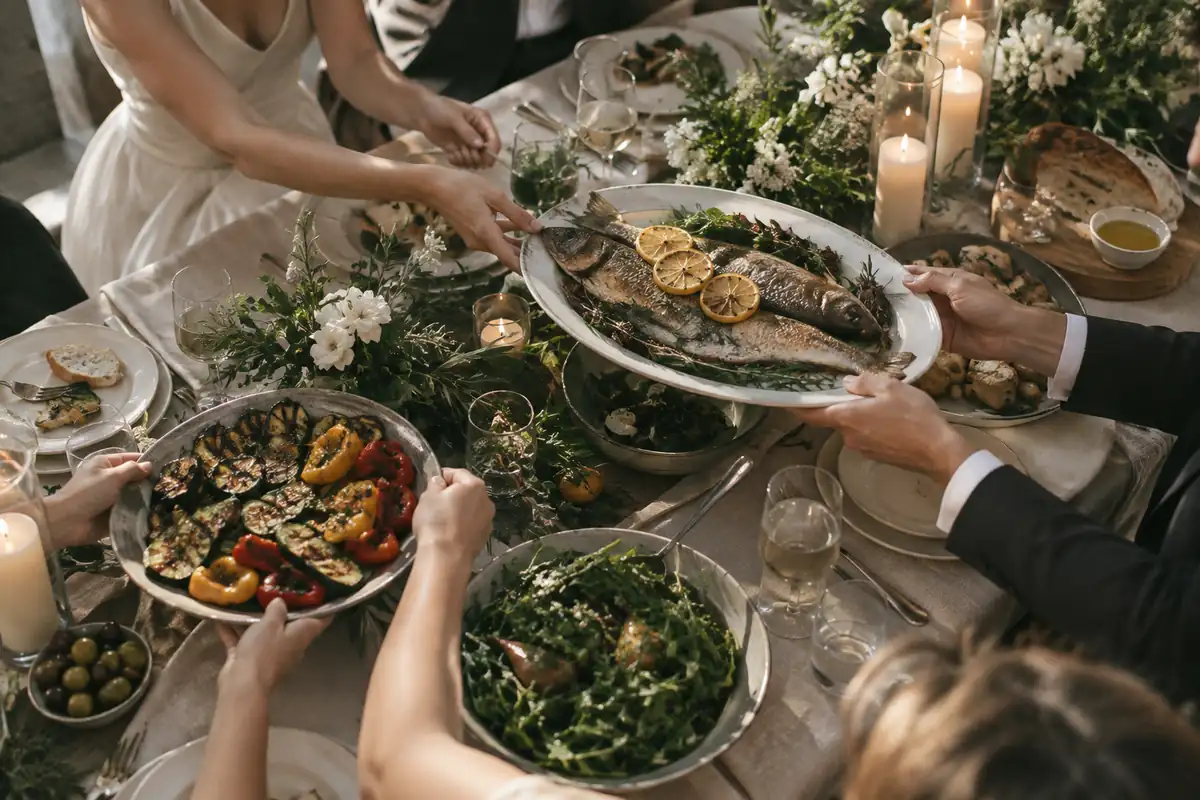
The tone should be relaxed rather than a dress rehearsal for the reception. Many couples choose food that is different from the wedding menu: a family-style Italian dinner, a barbecue, a dish from the couple’s hometown or heritage, or a taco truck in the garden. If you want ideas, our guide to the wedding menu covers service styles that work just as well the night before.
A few details matter: a room where people can hear each other, some kind of microphone if there are more than thirty or forty guests, and seating that mixes the two families rather than putting them on opposite sides of the room.
Toasts and gifts
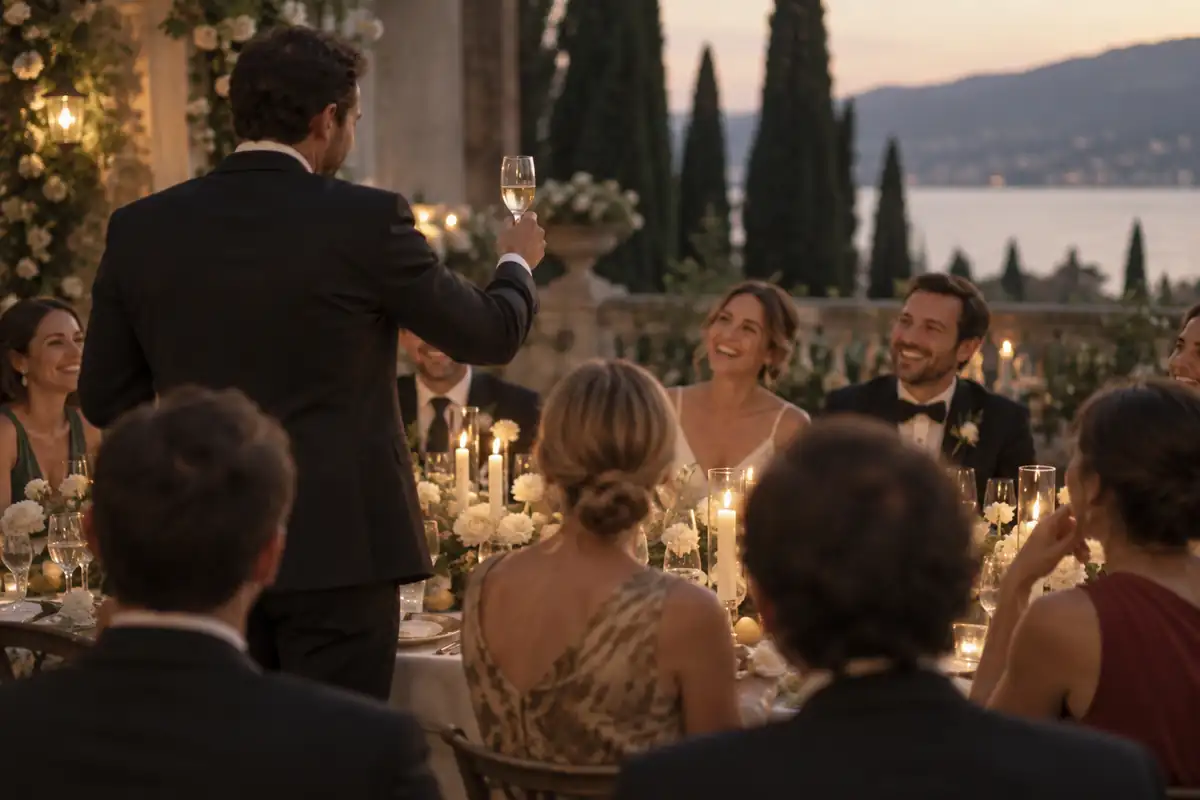
The rehearsal dinner is the natural home for longer, more personal toasts than the wedding allows: the childhood stories, the college friend’s speech, the grandparent who wants to say a few words. Still, keep the list planned.
The order. The host traditionally speaks first, welcoming guests and toasting the couple. Then others may speak, ideally people who aren’t giving a toast at the wedding. The couple close the toasts, thanking their families, the wedding party and everyone who traveled.
The length. A few minutes each. Our guide to wedding toasts applies here too.
Gifts. This is a good moment for the couple to give gifts to the wedding party and parents, with a sentence or two about each person. Keep the presentation brief, and make sure any gifts the attendants should wear on the day (cufflinks, jewelry) are given here, not in the morning rush.
The welcome party alternative
A welcome party is a relaxed gathering for all, or most, wedding guests the evening before the wedding, especially when many have traveled. It is often drinks and passed food rather than a seated dinner, and may replace the rehearsal dinner or follow it.
When it makes sense. Destination weddings, weekend weddings and any wedding where most guests are out of town. It lets everyone arrive, find each other and start the weekend together.
How to combine the two. Some couples hold a short, private rehearsal dinner for the wedding party and family, then move to a larger welcome party in the same place at nine o’clock. Others skip the formal dinner and hold one welcome party for everyone.
Include the welcome party on the wedding website and in the guest list planning, so everyone invited knows where to be and when.
A simple schedule
- 5:00 p.m. Rehearsal at the ceremony site with the officiant, using the order of the ceremony as the script.
- 6:00 p.m. Travel to the dinner.
- 6:30 p.m. Drinks.
- 7:15 p.m. Dinner; the host welcomes guests.
- 8:15 p.m. Toasts and gifts.
- 9:30 p.m. Wedding party heads home; families stay as long as they like.
Then sleep. The next day is the reason for all of it.
Written and edited by the Today’s Weddings editors. How we research and check what we publish is set out in our editorial standards. Spotted something wrong? Tell us.