Unity Ceremonies: Candle, Sand, Handfasting and More
Two candles lighting a third, two jars of sand poured into one, a cord tied around joined hands. How each unity ritual works, what it needs and where it fits in the ceremony.
The unity candle is a set of three: a thick pillar in the center and a slim taper on either side. Partway through the ceremony, the couple each take a lit taper and together light the pillar. It has no liturgy behind it and belongs to no one faith, which is exactly why it spread so widely through American weddings, religious and civil alike, and why so many variations have grown up around it.
All unity rituals share the same shape. Two separate things become one visible thing, in front of everyone, without anyone needing to say much. Choose the one that suits your venue, your story and your tolerance for things going wrong in public, and rehearse it once.
The unity candle, in detail
What you need. A pillar candle, two tapers, holders for all three, a long-reach lighter and a small table. A matching unity set is sold everywhere, but any well-made pillar and pair of tapers will do. Choose unscented, dripless candles.
Before the ceremony. Light all three wicks a day or two ahead and blow them out. A pre-burned wick catches at once; a new one, still coated in wax, can refuse to light while a hundred people watch. Put the table to one side of the altar, where it won’t block the photographer’s view of your faces, and assign someone, often the coordinator or an usher, to light the tapers just before guests are seated.
Who lights the tapers. There are several traditions, and all are correct:
- The tapers are already burning when guests arrive, standing for the two of you as individuals.
- The mothers, or another parent or grandparent from each side, light one taper each at the end of the seating of honored guests, just before the processional music changes.
- Each partner lights their own taper on arrival at the altar.
- Children from earlier relationships light the tapers, or join their parents at the center candle. For a blended family this is often the most moving version.
Lighting the center candle. The officiant introduces the moment in a sentence or two. The couple walk to the table, take their tapers and light the pillar together. Then comes the one real decision: some couples blow their tapers out to show that two lives have become one; others leave them burning, to say that each remains a person in their own right. Either is fine. Decide in advance so you don’t stand there hesitating.
Music or silence. A short instrumental passage, a soloist, a reading or simply silence all work. Luther Vandross’s “Here and Now” and John Lennon’s “Grow Old With Me” have long been popular choices; our ceremony song library has many more. Time the music to the ritual: a candle lighting takes about a minute, not the length of a full song.
Outdoors. Even a light breeze can put a taper out. Use glass hurricane lamps around all three candles, light the pillar’s wick through the top of the glass with the long lighter, and have a backup lighter in a groomsman’s pocket. For a beach or a windy hilltop, choose a different ritual altogether.
Venue fire rules
Check before you buy. Open flames are where most unity plans fail.
Many venues allow only enclosed flames, meaning the flame must sit inside glass, and some ban flames entirely. Historic buildings, tents, barns and wooded sites are often the strictest, and outdoor burning restrictions in dry seasons can override whatever the venue normally allows. Ask for the policy in writing.
Some houses of worship don’t permit a unity candle. It is not part of most formal liturgies, and some Catholic parishes, for example, don’t allow it during the wedding Mass, while others are happy to include it. Ask your officiant early, and ask where in the service it could go.
Battery candles are an honest substitute if flames are banned but you love the image. The best LED pillars have a wax exterior and a convincing flicker. The meaning survives; only the smell of a snuffed wick is lost.
Flame-free alternatives
Sand ceremony. Each partner pours a different color of sand from a small vessel into one larger glass vase, sometimes in alternating layers, so that the grains can never be separated again. It suits beaches, gardens and blended families, since children can add their own color. Use a funnel-mouthed vase with a tight lid or cork, put a cloth under it, and choose sand with clearly contrasting colors so the layers show in photographs. The finished vase goes home with you.
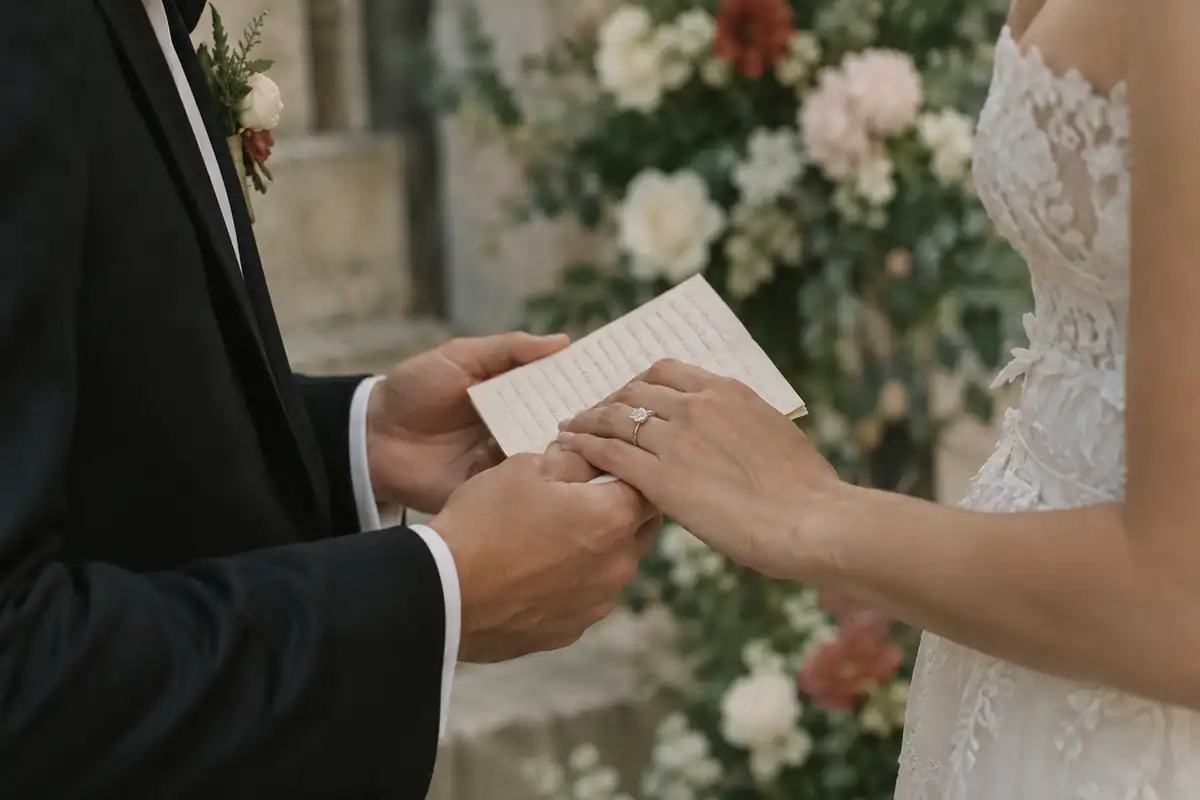
Handfasting. An old practice from the British Isles, revived in Celtic and pagan weddings and now common at secular ones. The couple join hands, and the officiant, or family members in turn, wraps ribbons or a cord loosely around them while saying a line about what each strand stands for: patience, humor, faith, family. Then the knot is tied and slipped off whole, to keep. Choose a cord of about two yards, use contrasting colors or ribbons that match your palette, and practice the wrap once so it doesn’t tangle.
A cord of three strands. Popular at Christian weddings, this takes its name from Ecclesiastes 4:12, “a threefold cord is not quickly broken.” The couple braid three strands together, often two for the partners and a third for God, on a small stand that holds the ends. Have the braid started before the ceremony so you only finish the last few inches. The passage it comes from is in our reading from Ecclesiastes.
The wine ceremony. There are two versions. In one, each partner pours a different wine into a single glass and both drink from it. In the other, the couple seal a bottle of wine and letters they have written to each other in a wooden box, to be opened on a chosen anniversary or in a hard moment. The box version photographs well, and it gives the ritual a second life years later. Hammer and nails are optional; a lid that locks is easier.
Tree planting. The couple pour soil, often brought from each of their family homes, around a sapling in a pot, then water it together. Afterward it is planted at home, where it grows alongside the marriage. Choose a species that suits your climate and a pot small enough for one person to carry. It pairs naturally with a lower-waste wedding.
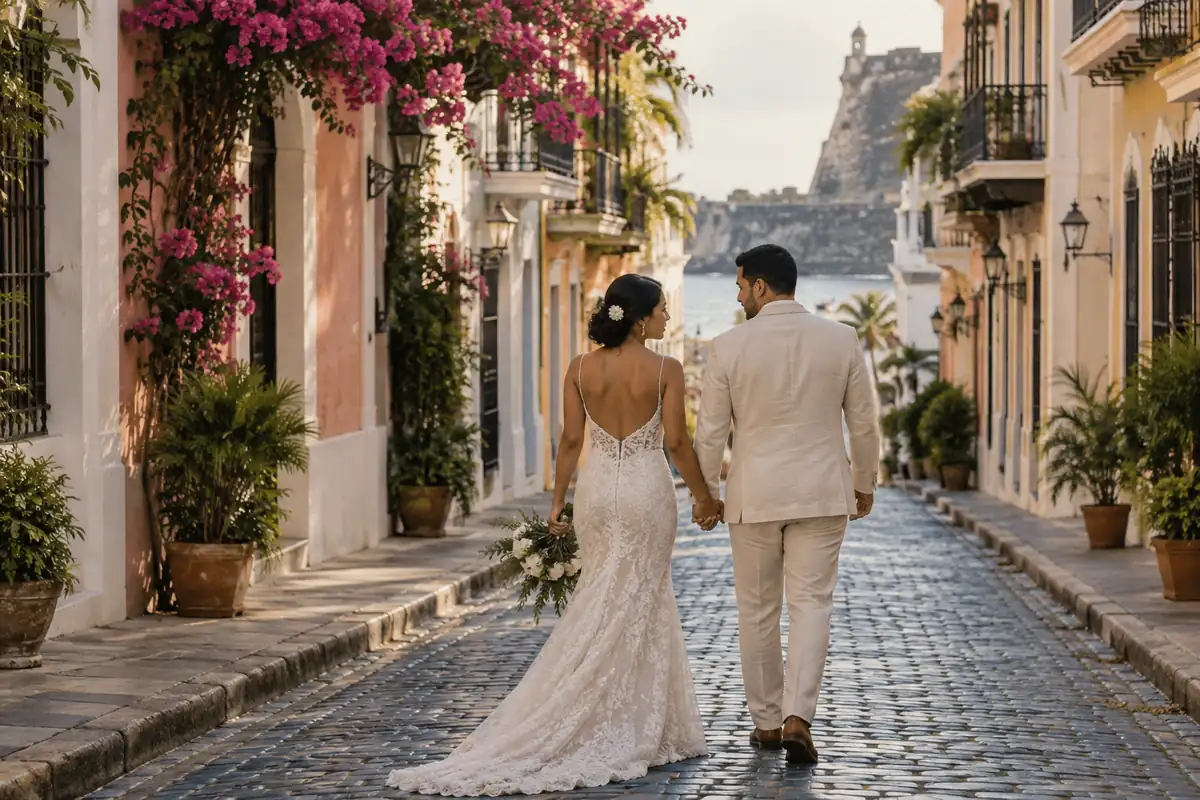
Rituals from other traditions. Many cultures had unity rituals long before the candle. In Mexican and Filipino Catholic weddings, sponsors drape a lazo, a cord or rosary, around the couple’s shoulders; in Spanish and Latin American ceremonies, the arras, thirteen coins, pass from one partner to the other. Our guides to wedding traditions around the world and Puerto Rican wedding traditions describe more.
Where it goes in the order of service
The usual place is after the vows and the exchange of rings, and before the declaration of marriage and the kiss. The vows are the promise; the unity ritual is the picture of it; the pronouncement seals it. In outline:
- Processional and welcome
- Readings
- Vows and exchange of rings
- Unity ceremony
- Declaration of marriage and kiss
- Recessional
Some couples move it earlier, after the readings, if it involves family members who should be seated quickly afterward. Our guide to the order of the ceremony shows the full running order for religious and civil services.
Keep it short. Two to four minutes is plenty. Ask your officiant for a sentence or two of introduction so guests understand what they’re watching; for a handfasting or cord ceremony, the words are part of the ritual and can be written together, the way you might write your vows.
Rehearse it. At the rehearsal, walk to the table, pick up the tapers or vessels, and practice where to stand: slightly angled toward the guests, never with your backs to them. Decide who carries the box or the cord to the front, who clears the table afterward, and who makes sure the vase, the braid or the candle comes home with you at the end of the night.
Written and edited by the Today’s Weddings editors. How we research and check what we publish is set out in our editorial standards. Spotted something wrong? Tell us.